
In a corporate world, you must have heard this term “Constructive feedback”. But do we all understand what it really means?
Constructive feedback is specific, actionable suggestion provided to help someone improve their performance and grow professionally. Unlike negative criticism, which often focuses on what is wrong, constructive feedback acknowledges strengths and highlights areas for growth. It basically helps individuals understand their performance, build on their strengths, and address weaknesses in a productive manner.
How to Give Constructive Feedback
Providing constructive feedback requires thoughtfulness and a structured approach. Here’s how to do it effectively:
Get a Deeper Understanding of the Context First
Before offering feedback, take time to understand the situation fully. For example, if an employee missed a deadline, investigate whether there were external factors such as additional workload or unforeseen challenges that contributed to the delay. This understanding helps ensure your feedback is relevant and fair.
Praise Hard for What They Do Well and Acknowledge Strengths
Acknowledge the positive aspects of their performance, even if they are not perfect. For instance, if a team member delivered a project late but with exceptional quality, commend them for their attention to detail and thoroughness. Highlighting their strengths encourages them and makes them more receptive to areas needing improvement.
Offer Granularity
Specificity is key. Instead of saying,
“Your report needs improvement”
provide detailed suggestions such as,
“Your report is thorough, but it would be more effective if in the second section of your report, your recommendation could be supported with real-world examples and visuals.”
Avoid Personalization
Focus on the behavior or outcome, not the individual. Use “I” statements to express your observations, such as,
“I noticed that the presentation could benefit from more visual aids”
rather than,
“You are not good at creating presentations.”
This approach helps avoid defensiveness and keeps the conversation professional.
Be Specific and Objective
Base your feedback on facts and behaviors you observed. For example,
“The client meeting yesterday ended abruptly because the presentation was running over time. Next time, please keep track of time and prioritize the key points.”
This type of feedback is clear, actionable, and based on specific events.
Following template, I personally use for giving constructive feedback,
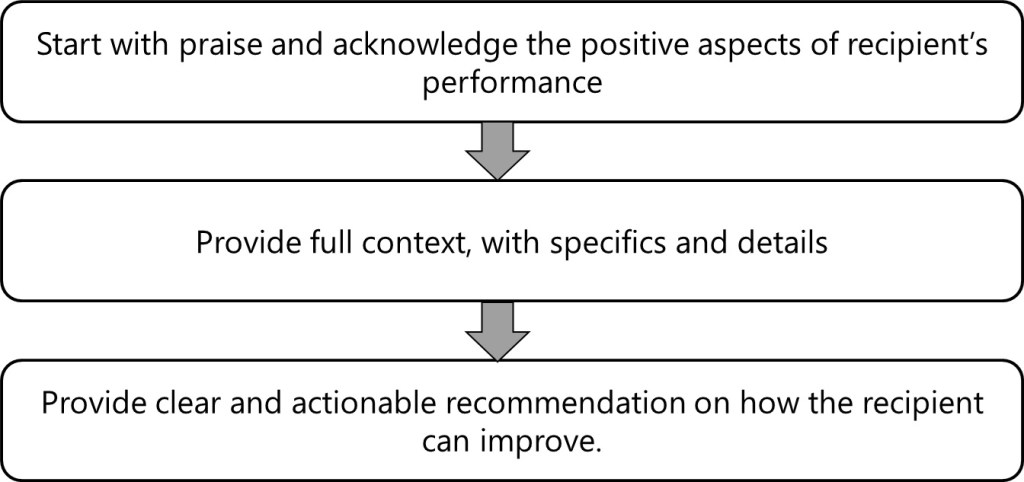
How to Get Constructive Feedback
Actively seeking feedback is crucial for personal and professional growth. Here is few guidance to do it effectively:
Be Proactive in Asking for Feedback
Don’t wait for annual or half-yearly reviews. Regularly ask for feedback in various settings such as one-on-one discussions, weekly meetings, or casual conversations. For example, after completing a project, ask your manager,
“Can you provide feedback on my recent project? I’m particularly interested in how I handled stakeholder communication.”
Ask for Details
When receiving feedback, seek specifics. Instead of
“How am I doing?”
ask
“Could you provide feedback on my project presentation? Specifically, I’d like to know how I handled the Q&A session.”
Detailed feedback helps you understand what to continue doing and where to focus improvements.
Choose the Right Provider
Ensure you are getting feedback from someone knowledgeable about your work. For example, feedback on your coding skills should come from a peer or senior in your technical team rather than someone from a non-technical department.
How to React to Feedback
We are humans, receiving feedback, especially when it includes areas for improvement, can be sometimes challenging. Here’s how to handle it constructively:
Make Providers Feel They Helped
Acknowledge the feedback and thank the provider. For example, say,
“Thank you for your feedback. I appreciate your insights and will work on incorporating your suggestions.”
This encourages them to continue providing valuable feedback in the future.
Take Action
Show that you value the feedback by taking concrete steps to improve. If feedback indicates that your presentations lack clarity, consider taking a course on effective communication or practicing more before your next presentation.
Don’t React Negatively and don’t fight back instinctively
Give yourself time to process the feedback before responding. Maintain a positive attitude and avoid defensive reactions. If you feel the feedback is unfair, ask for clarification rather than arguing. For instance,
“Can you help me understand your perspective better?”
If needed, request a follow-up discussion after you’ve had time to reflect. This shows maturity and a willingness to learn.
Conclusion
Please remember, constructive feedback is a powerful tool for personal and professional development. It’s a gift. Embrace it, learn from it, and use it to grow.








 Manish's - Thoughts and Learnings
Leave a comment