
Generative AI is the buzzword that’s transforming industries and sparking innovation everywhere. But as Product Managers (PMs), we know that excitement alone doesn’t pay the bills. To make AI investments meaningful, it’s crucial to measure their Return on Investment (ROI).
In this post, let’s dive into what ROI means for Generative AI, how to calculate it, and why productivity is often the crown jewel of AI’s value. We’ll also deep dive using a hypothetical example to keep it relatable.
What Exactly Is ROI, and Why Does It Matter?
ROI, or Return on Investment, is like the scorecard of your AI initiative. It answers the fundamental question: “Are we getting back more than what we’re putting in?”
For Generative AI, ROI helps justify costs to stakeholders, win over skeptics, and guide strategic decisions. Here’s the formula you’ll need to calculate ROI:
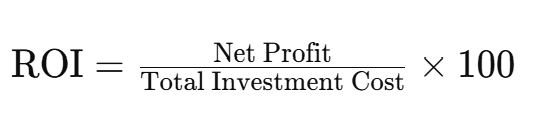
Here, Net Profit is the difference between the business value generated (like increased efficiency or revenue) and the total costs incurred (like development and training expenses).
Breaking Down Costs
The cost of implementing Generative AI isn’t just a single line item in your budget. It’s a mix of Development Costs and Business Adjustment Costs, each with its nuances.

Development Costs
- AI Models – Building or buying AI models involves significant investment. Pre-trained models might come with licensing fees, while custom-built ones demand skilled talent and computational resources.
- Software Tools – AI development relies on specialized tools like TensorFlow, PyTorch, Azure AI Studio or other platforms. These tools often require expensive licenses or subscriptions.
- Cloud Computing Resources – Generative AI models aren’t lightweight. Running and training them on cloud platforms like AWS, Google Cloud, or Azure involves recurring costs for storage, compute power, and bandwidth.
- AI Specialists – Skilled AI engineers, data scientists, and ML practitioners don’t come cheap. Their salaries form a substantial chunk of your investment.
- Data Preparation – Data is the lifeblood of AI, but it rarely comes in ready-to-use form. Expenses for cleansing, annotating, and integrating data can pile up quickly.
- Governance and Security – Regulatory compliance and robust security measures are non-negotiable. Whether it’s GDPR, HIPAA, or industry-specific standards, staying compliant costs money.
Business Adjustment Costs
- Market Research and Consulting – Before you deploy AI, aligning it with your business objectives is crucial. This often involves hiring consultants or conducting in-depth market research.
- Process Redesign – Integrating AI into your workflows isn’t plug-and-play. Processes may need reengineering to fully leverage AI capabilities, which takes time and money.
- Marketing and Communication – Promoting your AI-powered solutions requires targeted campaigns, internal training sessions, and communication strategies to manage expectations.
- Change Management – Adopting AI means dealing with organizational inertia. Investing in stakeholder engagement and employee buy-in can smoothen the transition.
- Upskilling and Talent Development – Generative AI isn’t just for techies; teams across functions must understand its applications. Continuous learning initiatives are necessary to bridge this gap.
- Ongoing Research – The AI landscape evolves rapidly. Keeping up with new technologies and adapting your solutions requires a dedicated research budget.
The Value Side: Why Productivity Is Your Best Bet
Generative AI creates value in many ways—revenue growth, cost savings, compliance improvements, and customer satisfaction. But let’s focus on productivity, often the easiest and most measurable metric.
When AI improves productivity, it directly impacts efficiency, cost savings, and time-to-market. Here’s a structured way to calculate its value:
Steps to Calculate Productivity Gains
- Identify Key Processes – Begin by pinpointing the business processes that AI will enhance. For example, will it streamline customer support, speed up content creation, or automate repetitive tasks?
- Measure Baseline Productivity – Assess how these processes perform before AI implementation. Collect data like average output, time taken, and associated costs.
- Implement AI Solutions – Deploy your Generative AI solution and integrate it into the identified processes.
- Measure Post-AI Productivity – After a set period, re-assess the performance of those processes.
- Calculate Productivity Gain – The difference between post-AI and baseline productivity is your productivity gain.

- Quantify Business Value – Convert this gain into monetary terms by analyzing cost savings, additional revenue, or resource optimization.
Example – ROI calculation for Generative AI in Customer Support
Let’s build on the hypothetical customer support scenario to demonstrate how you can calculate ROI over multiple years. Please note, this is hypothetical example, with hypothetical numbers, and should not be taken for any reference.
Hypothetical Scenario
Suppose you implement a Generative AI chatbot to assist with customer support. Before the AI implementation, your team manually resolved 100 tickets per day. After deploying the chatbot, the team’s productivity increases to 150 tickets per day.
- Cost per ticket resolved manually: $40
- AI implementation cost: $300,000 upfront
- Ongoing operational cost (cloud, maintenance, updates): $50,000 per year
Steps to Calculate Productivity Gain
Let’s say you deploy a Generative AI chatbot for customer support.
- Key Process: Automating ticket resolution.
- Baseline Measure: Your team resolves 100 tickets per day.
- Implement AI: A chatbot assists with repetitive queries.
- Post-AI Productivity Measure: Now, 150 tickets are resolved daily.
- Calculate Gain: That’s 50 additional tickets per day.

- Quantify Value: If each resolved ticket through AI saves $30, you’re saving $1,500 daily. Over a year, assuming 5 working days in a week (approx. 250 days in a year), this translates to $375,000 in savings per year!
Steps to Calculate ROI
Calculate Baseline Costs (Before AI)
Without AI, resolving 100 tickets per day costs $4,000 ($40 per ticket). Assuming 250 working days a year:
Annual Baseline Cost = 100×40×250 = $1,000,000 ($1M)
Calculate Post-AI Productivity Costs
With AI, resolving 150 tickets per day now costs $40 per ticket for human effort on 100 tickets and $10 per ticket for AI-assisted effort on 50 tickets:
Daily Cost with AI = (100×40) + (50×10) = $4,500
For 250 working days a year:
Annual Cost with AI = 4,500×250 = $1,125,000
Add annual operational costs of $50,000:
Total Annual Cost with AI = $1,175,000
Calculate Productivity Savings
AI increases productivity by 50 tickets per day, saving $30 per ticket for those 50 tickets:
Daily Savings = 50×30 = $1,500
For 250 working days:
Annual Savings = $1,500×250 = $375,000
Year-1 ROI
In the first year, include the upfront AI implementation cost of $300,000:
Net Savings Year 1 = $375,000 – $300,000(implementation cost) – $50,000 (operational cost) = $25,000
ROI for Year 1:

Year-2 and Beyond ROI
From second year onwards, only operational costs apply:
Net Savings Year 2+ = $375,000−$50,000 (operational cost) = $325,000
ROI for Year 2+:

Summary of Multi-Year ROI
| Year | Savings ($) | Costs ($) | Net Savings ($) | ROI (%) |
| 1 | 375,000 | 350,000 | 25,000 | 7.14% |
| 2 | 375,000 | 50,000 | 325,000 | 650% |
| 3 | 375,000 | 50,000 | 325,000 | 650% |
| 4 | 375,000 | 50,000 | 325,000 | 650% |
Takeaways
- Breakeven Point – You recover your upfront investment within the first year.
- Exponential ROI – From 2nd year onwards, the ROI skyrockets to 650%, thanks to minimal operational costs.
- Sustainable Value – This analysis demonstrates how Generative AI not only boosts productivity but delivers sustained value over time.
Tackling Challenges: Staying Grounded
- Hidden Costs – Be prepared for unanticipated expenses like additional training sessions or unexpected delays in implementation.
- Change Resistance – Teams often resist adopting new technologies. Address their concerns early and demonstrate the benefits clearly.
- Overpromising Results – Avoid overselling AI as a magic wand. Be realistic about its capabilities and set achievable expectations.
Generative AI is a long-term investment, not a shortcut
Generative AI is a powerful tool, but it’s not a one-size-fits-all solution. By calculating ROI thoughtfully — considering both costs and value — Product Managers can make a compelling case for AI investments. Focus on incremental wins, keep productivity gains measurable, and don’t shy away from tough conversations about cost-benefit trade-offs.
And remember, as we say in India, “Dhanda sirf paisa dekh kar hota hai” – business runs on numbers! So, make sure your ROI speaks for itself.







 Manish's - Thoughts and Learnings
Leave a comment